Franchise Cannibalization: How to Protect Existing Sales
Franchise Cannibalization: How to Know When New Units Are Taking Sales from Existing Locations
Franchise networks tend to measure growth by unit count. A new location opens, the map gets another pin, and the expansion story writes itself into the next investor update. But not every additional unit adds new revenue to the system. In a dense market, a new restaurant can just as easily pull customers, delivery orders, and foot traffic away from a location that’s already open a mile down the road. That’s franchise cannibalization, and it’s one of the harder problems to catch early — on paper, the new store still looks like a win, right up until someone pulls the trade area data on the unit next to it.
What Is Franchise Cannibalization?
Definition of franchise cannibalization
Franchise cannibalization is what happens when a new location in a network reduces the sales, traffic, delivery volume, or profitability of an existing unit that draws from the same customer base. Nobody has to do anything wrong for this to happen — it’s simply the result of two stores, or two delivery zones, pulling from the same pool of hungry customers instead of two separate pools. The new unit can hit its own sales targets and still be a net negative for the system, because the revenue it’s generating was already being spent at the restaurant three blocks away.
In restaurant franchising this shows up in a few recognizable forms: brick-and-mortar units placed too close together, delivery zones overlapping on the same aggregator, or a new drive-thru intercepting commuters who used to stop at an existing location along their usual route. Some franchise agreements address this directly — Item 12 of the Franchise Disclosure Document is where a franchisor discloses whether a location gets any protected or exclusive territory at all, and that disclosure becomes the reference point whenever a franchisee argues that a nearby opening hurt their business.
Franchise cannibalization vs. healthy network expansion
Not all internal competition is a problem. A new unit is healthy for the system when it reaches customers the existing store wasn’t serving — a different neighborhood, a different daypart, or a format the existing unit simply couldn’t support, like a drive-thru-only box next to a dine-in restaurant that had run out of parking. Starbucks built much of its early growth on this idea on purpose: throughout the 1990s and 2000s the chain deliberately clustered stores close together in dense urban corridors, and former CEO Howard Schultz was open about the fact that the company was knowingly cannibalizing a meaningful share of its own stores every day as part of that strategy. It worked as long as the clustering generated enough brand visibility and incremental commuter traffic to offset what individual stores gave up to their neighbors.
The problem starts when that redistribution stops paying for itself — when systemwide same-store sales growth slows or turns negative even as unit count keeps climbing, because the new locations are mostly just moving existing demand around the map rather than adding to it. That distinction matters commercially, not just semantically: one pattern grows the pie, the other just re-slices it.
Why Cannibalization Happens in QSR and Restaurant Franchising
Overlapping trade areas and delivery zones
Every restaurant draws from a trade area — a dine-in catchment defined by drive time or walking distance, with a delivery radius layered on top of it. Problems start when a new unit’s trade area and delivery zone overlap heavily with an existing unit’s. Real estate teams that model this properly before signing a lease typically check how much of the two trade areas’ drive-time polygons actually overlap; once that figure crosses somewhere around a fifth to a quarter of the total area, meaningful revenue transfer between the two stores becomes close to unavoidable. Below that threshold, overlap is usually manageable. Above it, the new unit is competing with its own network more than it’s competing with outside brands.
Too many similar units in one territory
Density on its own isn’t the enemy — plenty of QSR brands run profitably with several units inside a few square miles, provided the underlying demand actually supports it. The trouble starts when a franchisor adds unit count in a territory faster than that territory’s population, foot traffic, or order volume is growing. At that point, every new opening competes with the brand’s own stores for a customer base that hasn’t gotten any bigger, and average sales per unit start sliding across the whole territory, not just at the store nearest the new location.
Aggregators and digital ordering can make overlap worse
Physical distance used to be a decent proxy for how much two locations competed with each other. Delivery apps have made that proxy far less reliable. Two restaurants can sit on opposite sides of a city and still show up in the same customer’s app at the same time, competing for the exact same order, because aggregator delivery radiuses rarely map neatly onto the drive-time trade areas real estate teams have historically used to plan expansion. A new unit that looks geographically distinct on a map can still be cannibalizing an existing unit’s delivery orders if their platform coverage areas overlap — and that overlap needs to be checked against the delivery app’s actual zone data, not estimated from distance alone.
Key Signs of Franchise Cannibalization
Same-store sales decline after a new opening
This is usually the first and clearest signal. If an existing unit’s comparable sales drop in the months following a nearby opening, and that drop doesn’t line up with a normal seasonal pattern, cannibalization is the first explanation worth ruling out — not the last.
Flat total market sales despite more locations
Look past any single store’s numbers to the territory total. If a city or DMA adds units but combined sales across every location in that territory barely move year over year, the network isn’t creating new demand — it’s spreading the same demand across more stores, which drags average unit volume down for everyone in it.
Falling average sales per unit
This is the network-level version of the same problem, and it’s often the one that gets missed longest, because total system revenue can still look healthy on a quarterly report even while sales per store are quietly eroding underneath it. A franchisor tracking only aggregate revenue can miss a cannibalization problem for a year or more if average unit volume by territory isn’t being watched separately.
Delivery order shifts between nearby restaurants
Order-level data from delivery platforms can show this far more precisely than sales reports do. If a new unit’s opening lines up with a drop in delivery orders at a nearby existing location — particularly orders originating from the same zip codes or the same customer accounts — that’s a much stronger signal than distance on a map.
How to Measure Cannibalization in QSR
Compare pre-opening and post-opening same-store sales
The most direct method is a before-and-after comparison: take an existing unit’s comparable sales trend for a set window before a nearby opening, then compare it to the same window after, controlling for seasonality and anything else that changed around the same time — pricing, marketing, menu updates. A widely cited academic study of Starbucks’ U.S. store network found that a neighboring outlet’s cannibalization effect on a given store averaged around 1.2% of sales within a one-mile radius, dropping to roughly 0.4% for stores between one and three miles apart. The exact figures will differ by brand, format, and market, but the distance-decay pattern itself is a useful reference point.
Analyze delivery zone overlap
Trade area overlap on a map is a start, but delivery platform data gives the more direct read on digital cannibalization specifically. Pulling the coverage radius each unit runs on the aggregators it uses, then checking how much of that radius is shared with a nearby unit, shows where digital orders are likely to migrate regardless of how far apart the two physical addresses actually are.
Track total territory sales, not only new unit sales
A new unit hitting its own sales targets doesn’t tell a franchisor much by itself. The more useful number is what happened to total sales across every unit in that territory, old and new combined, over the same period. One franchise real estate consultancy illustrates the risk with a simple example: a brand running five stores that generate $25 million combined opens a sixth expecting another $5 million, assuming the market will simply grow to $30 million — but if the new store pulls half its volume from the other five, the territory might net out at $2.5 million in real gain or less once the existing units’ losses are subtracted.
Use customer-level data where available
Where loyalty programs, app accounts, or POS-linked customer data exist, they give a far cleaner read than aggregate sales ever can. Repeat-order frequency, the share of a new unit’s customers who are genuinely new to the brand versus previously ordering from a nearby location, and customer migration between store IDs all separate real growth from redistributed demand more precisely than store-level totals can.
Separate cannibalization from broader market decline
Not every post-opening sales dip is cannibalization. A competitor opening nearby, a local economic downturn, a pricing change, or plain seasonality can all produce the same symptom: a drop in comparable sales at an existing unit. The only way to isolate the cannibalization effect specifically is to check whether the decline correlates with the new opening’s timing and trade area, and whether it’s concentrated at the units closest to the new location rather than spread evenly across the whole territory.
How to Prevent Franchise Cannibalization
Build clear territory planning rules
The cheapest fix is the one applied before a lease gets signed. Defining trade areas, protected or exclusive zones, and a territory’s realistic capacity for additional units — before development even starts scouting sites — keeps individual real estate decisions from working against the network’s own store two miles away. This is also the substance behind FDD Item 12: franchisors are required to disclose what territorial protection, if any, a location actually receives, which is exactly the information a franchisee needs before signing, and a useful starting point for the kind of data-driven franchise expansion that avoids surprises later.
Use data-driven site selection
Site selection models built around traffic counts and demographics alone will happily approve a location that scores well on paper and still cannibalizes a neighboring unit once it opens. The models that hold up over time also weigh projected impact on nearby company units — candidate demand, demand transferred from existing stores, and genuinely net-new demand — as separate line items rather than one blended score. It’s worth noting that some large franchisors sidestep the territory-rights question altogether by keeping site selection centralized.
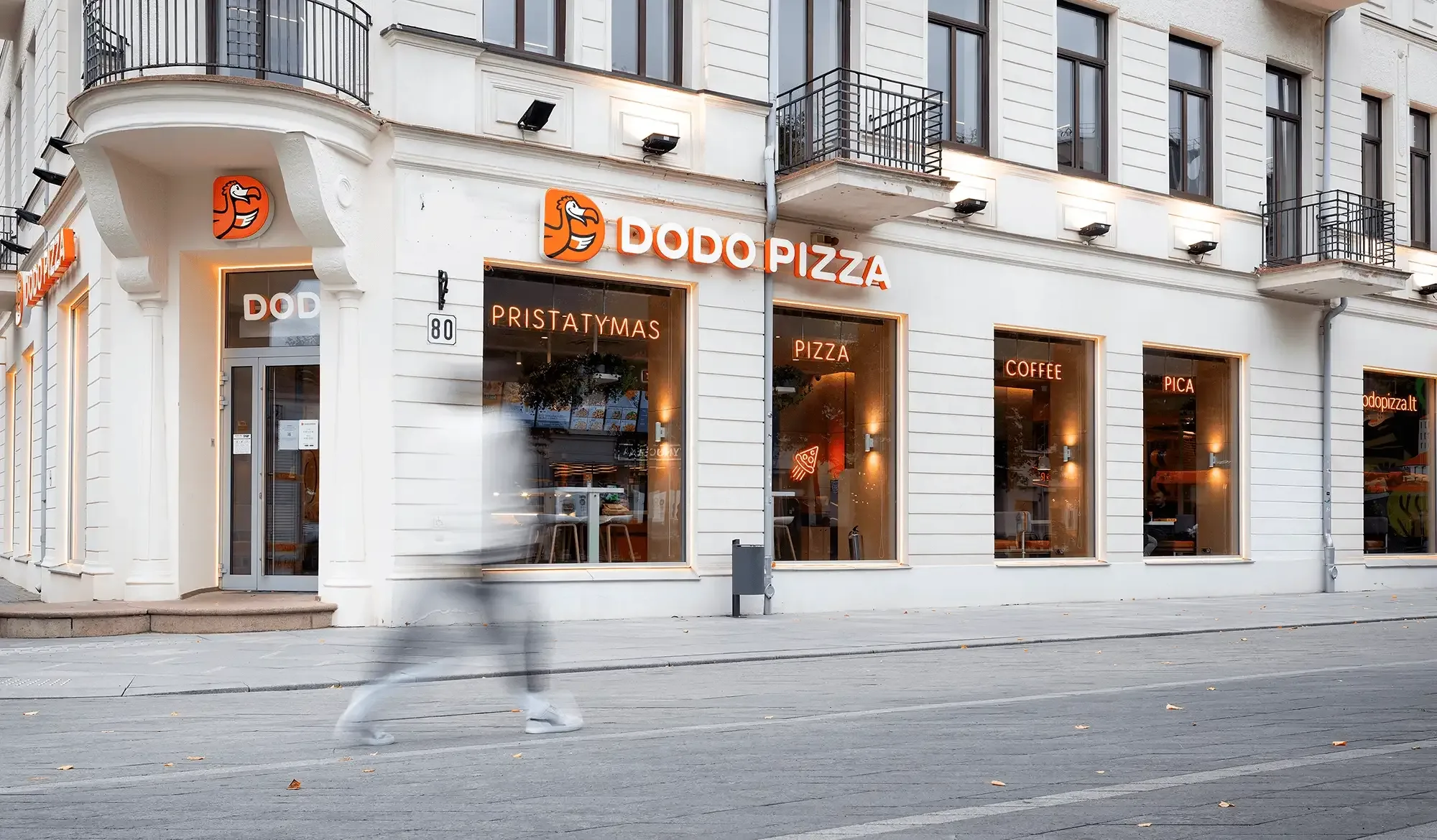
Dodo Brands takes the same care within its master franchise model: before a new location is approved, the company’s business developers review the candidate site together with the partner developing that territory, including using geoanalytics tools to check overlap in trade area and delivery coverage against that partner’s existing units.
Optimize delivery coverage before adding new stores
Before greenlighting another physical unit, it’s worth checking whether the actual gap is delivery service quality or coverage at the existing location — slow delivery times, thin aggregator coverage, or a delivery radius that stops just short of a dense pocket of demand. Extending or improving delivery from an existing kitchen sometimes captures the same incremental demand a new unit would have chased, without adding a second location to compete for the same trade area.
Use different formats to reduce overlap
Format variation is one of the more reliable ways to add capacity in a dense territory without directly competing with an existing unit. A smaller footprint, a delivery-focused unit, or a virtual brand running out of an existing kitchen’s slack capacity can capture incremental demand instead of splitting it. The industry has already tested the version of this that doesn’t work well: standalone ghost kitchen operators such as Kitchen United shut down or sold off their locations once it became clear that delivery-only units, built as their own separate real estate footprint, mostly ended up competing with the restaurants already covering that same delivery radius — and Uber Eats eventually delisted large numbers of ghost kitchen listings once platform crowding itself became the problem. The version that has held up better is running a genuinely distinct virtual brand out of an existing restaurant’s kitchen during its slower hours — Chili’s “It’s Just Wings” is the well-known example — which adds order volume without adding a competing physical location at all.
Franchise Cannibalization vs. Market Saturation
These two get confused often enough that it’s worth separating clearly, without turning this into a detour. Cannibalization is a network- or unit-level phenomenon: it’s about how one location’s opening affects another location inside the same brand, or how a delivery channel pulls demand away from a specific dine-in unit. Market saturation is a broader condition of total addressable demand in a market — a question of foodservice market maturity, not of any particular pair of stores. A territory can show real cannibalization symptoms, like falling average unit volume or franchisee complaints, well before it’s anywhere close to saturated, simply because units were placed too close together. Just as easily, a market can be genuinely saturated with no cannibalization problem at all, if every brand operating there has spaced its own units sensibly. Diagnosing one when the real issue is the other leads to the wrong fix — pausing development network-wide won’t solve a territory planning problem, and redrawing a couple of trade areas won’t fix a market that’s genuinely full.
Why Cannibalization Analysis Matters for Sustainable Franchise Growth
Unit count is an easy number to put in a deck, but it’s a poor proxy for how healthy a franchise system actually is. A network that grows store count while average unit volume and same-store sales quietly decline is trading a good headline for a worse P&L at the franchisee level, and franchisee profitability is what keeps a system able to recruit and retain operators in the first place. Sustainable growth means checking whether a new opening added to total territory sales or just moved sales around the map, protecting the unit economics that make individual locations worth running, and keeping franchisees informed on how site decisions actually get made. None of this means density is inherently bad — some markets can support a lot of units if demand genuinely holds up. And none of it means cannibalization can be engineered away completely: even brands with sophisticated location analytics see some redistribution every time they open near an existing unit. The goal isn’t zero overlap. It’s making sure the overlap is a trade-off the numbers actually support, not an accident nobody modeled before signing the lease.
Conclusion
Franchise cannibalization isn’t a sign that expansion was a mistake. It’s a normal risk of growing inside a market a brand already serves, and one of the more manageable ones if it’s caught early. The networks that handle it well treat it as a data problem before it becomes a franchisee-relations problem: they track same-store sales and average unit volume by territory, model delivery zone overlap before a lease is signed, and rule out the other explanations before blaming a new opening. The ones that don’t tend to find out the hard way — usually from a franchisee who noticed the drop in their own numbers well before it ever reached a corporate dashboard.
Author

Anush Dolukhanyan
Editor-in-Chief